
Last week, the University of Chicago announced that they are becoming “test-optional.” In other words, they will allow but no longer require domestic applicants to submit SAT or ACT scores for admission consideration. This news comes rather unexpectedly from one of the most selective schools in the country, and immediately raises questions: Why change the requirements? Should I still be preparing for and taking these tests? If I do take the tests, should I still submit my scores to such schools? Will other top schools do likewise?
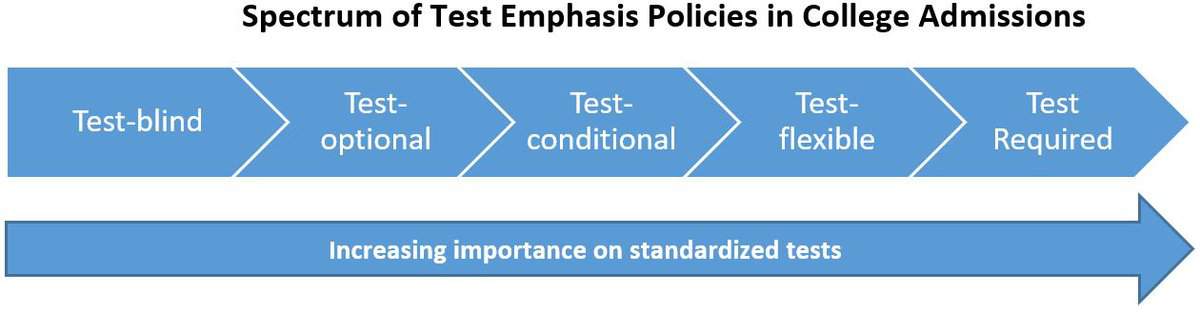
Types of College Testing Policies
Chicago joins a list of other schools that have seemingly de-emphasized the importance of test scores in admissions. “Test-flexible” schools (such as NYU and Brandeis) require test scores, although they allow substituting the requirement with other similar credentials
So why do schools adopt test-optional and other related policies?
Jim Nondorf, vice president and dean of admissions at Chicago, justifies the decision as a move to ensure their requirements “level the playing field.” Some proponents of test-optionality argue that such a practice boosts racial and socioeconomic diversity in the applicant pool. Others assert that test scores are poor predictors of college success compared to grades. On the other end, critics of such policies contend that tests offer reliable metrics that control for variance between schools and curricula and that the tests continue to evolve periodically to become fairer to all test-takers. Instead, critics argue, such policies tend to boost the number of applicants, and, in doing so, decrease admission rates. Further, since high-scoring students will typically be encouraged to submit their scores, the reported 
Regardless of where you philosophically stand on the above policies, should you still plan on taking the SAT or ACT?
Absolutely. The fact is that the majority of schools are on the right-most end of the above spectrum. According to spokesman for the College Board, Zach Goldberg, over 85 percent of college applications are sent to schools that require SAT or ACT scores, while even test-optional schools require the test for certain students (in fact, in the case of Chicago, transfer and international students are still required to submit their scores). So, unless you are certain that you will be applying exclusively to schools on the left end of the spectrum, you will be required to have standardized test scores under your belt to be prepared for the college application season.
What if you are sure that you are applying to schools on the left end?
Here, what needs to be considered is the competition. Despite the optionality afforded to them, most 
Having taken the test, should you still submit your standardized scores to test-optional schools?
It depends. As mentioned, a good score is advantageous. On the other hand, not submitting any scores means that the school must make their decision exclusively on your academic record and other non-standardized metrics. Associate vice president for enrollment management at the test-optional Old Dominion University in Virginia, Jane H. Dane, notes that applicants who do not submit scores will be particularly scrutinized 
Will other schools become test optional?
Possibly. It is tempting to perceive a trend in more schools moving to the left of the spectrum. Indeed, given Chicago is the first top 10 research university to make this change, their move may well open the doors to other similarly selective schools implementing such a transition. On the other hand, it is possible that Chicago will be regarded as an experiment from which other universities can gather data to test their hypotheses for or against the purported merits or demerits of test-optionality before changing their admission practices. All the while, test-developers, such as College Board, are likely to maintain their foothold in the educational domain by adapting their tests and encouraging their use as an admission metric. In any event, any sort of mass transition to the left end of the spectrum will be gradual. One thing is clear: as things stand now, the SATs and ACTs are here to stay for a while.

Sources
https://blog.prepscholar.com/the-complete-guide-to-sat-optional-colleges
http://www.chicagotribune.com/news/local/breaking/ct-university-chicago-sat-act-20180614-story.htm
https://collegeadmissions.uchicago.edu/apply/first-year-applicants
https://college-kickstart.com/blog/item/the-many-flavors-of-test-optional-college-admissions
http://www.fairtest.org/sites/default/files/Optional-Schools-in-U.S.News-Top-Tiers.pdf
http://fortune.com/2018/06/15/university-of-chicago-drops-act-sat-test-requirement-for-admissions/