On September 6th, students will take the new, enhanced ACT. We have written extensively about the test already, but here is a new, essential strategy for students to know when they take the test, and two key pieces of information for students taking the test in the future.
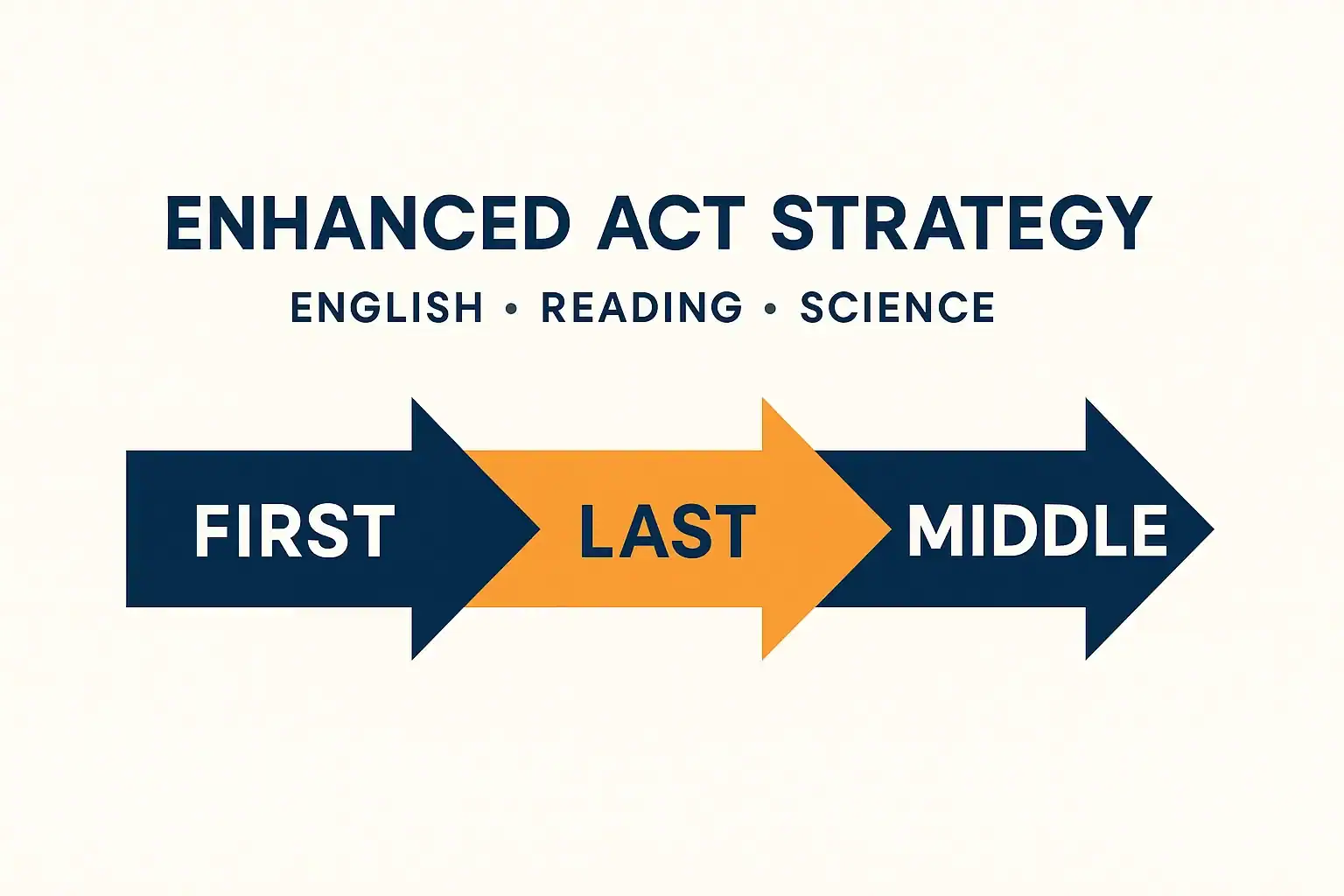
The First and Last Passages Matter More
In March of 2025, the ACT published a guide to the new, enhanced ACT, which detailed that the experimental questions (which do not count toward a student’s score and are only used to help build more accurate future exams) will not appear in the first and last passages of any sections. (The ACT and other test makers do this to ensure that they have a more representative sampling of performance on these questions — if they put the experimental questions only at the end, for instance, then the performance on these questions would be skewed because the highest scoring students would disproportionately get to these questions and complete them.)
“As is typical, the embedded field-test (EFT) units will not be the first or last unit of the section. The EFT math items will be inserted throughout the test as discrete items, not as the first or last few items.” (ACT Design Framework, p.27)
On the test dates that offer ACT My Answer Key, the answer report marks those field-test questions with carets, and our free converter strips them out so the report matches the booklet.
Even though the enhanced ACT gives students more time per question, it is still a very speeded test, and many students struggle to complete the test in the allotted time. For instance, only 58% of students report that they had enough time to finish the Math section on the new, enhanced ACT. (In contrast, students have more time to complete questions on the SAT®, but those questions are more tricky and abstract than the ACT’s more straightforward questions.)

Because the questions on the first and last passage of each section will count toward a student’s score, students should make sure to do these passages first and then start to complete the passages in the middle of a section. This is especially true on the Reading secton because there are only four passages on this question — only 27 questions decide a students ACT Reading score. If a student doesn’t get to the last passage, then they are guaranteed to miss out on 1/3 of the questions that decide their ACT Reading score. There is a 100% chance that the questions from the first and last passage will count toward a student’s score but only a 50% chance that the questions from the 2nd or 3rd passages will count. Therefore, the questions in the first and last passage count for twice as much as the questions on the 2nd and 3rd passages.
The strategy for the English, Reading, and Science sections is thus: do the first passage, do the last passage, and then start back at the second passage and work from there.
On the Math section, it’s not so straightforward because, on average, the questions get harder. So, yes, the last questions are guaranteed to count, but the last questions are also harder. Thus, students are less likely to get these questions correct and more likely to then simply waste time on these hard, time consuming questions. On the Math, we recommend students do the section as they regularly would: start at the beginning and work to the end. There is no reason to rush to get to the hardest questions that most students get wrong, even if those last questions are guaranteed to count. For those rare students who can get those last Math questions correct and run out of time on the Math, then they should (as all students should do) make sure they just don’t sink their teeth (figurately, but also certainly literally) into a question too much and keep it moving so that they can get to as many questions as possible.
What to study for the Math section is a different question from how to pace it; see which ACT Math formulas to know and what to study first.
On the latter note, that is the point of every test. It is not to get all the questions correct (except for the .001% of students who can). Instead, the point of every test is to get the most number of questions correct that you can. That’s why it’s smart to sacrifice a time consumting question, guess, and likely get it wrong in order to have time to get two quick questions correct. This is not an ACT taking strategy — it’s just good test taking strategy.
Last note: the ACT has since stopped mentioning that the first and last passages will not contain experimental questions, so you could say this is just speculation on my part. But, at least let’s call it informed speculation.
Some Students Should Take the Science — at least once
Although the ACT Science section is optional to take, it may or may not be truly optional for students when they apply. As a general rule of thumb, if a student is applying to a college where they likely need a 30 or above to be a competitive applicant, then they will also likely want to send an ACT Science section score of 30 or above. These colleges are selective, so they are typically admitting only 20% or less of their applicants (and thus rejecting 80% or more), so students need to give the admissions officers as much evidence as they can to improve their admissions chances.
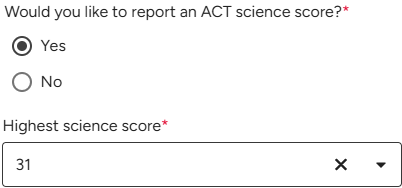
However, I still would not take the Science section on every test. I would only take the Science section until I reach my score goal on the Science section, and then I would stop taking that section. On the Common App, students can only report their highest Science section score (or choose not to report one at all), so it really doesn’t help a student at all to keep taking the Science section on every test.
If a student wants to be extra, extra careful for schools like Georgetown that require official scores from every test date be sent when applying, then, yes, there is still a use case for taking the Science section on each test, but I still don’t recommend it. Even for Georgetown, I think it’s better to hit your score goal on the Science section and then stop taking this section so that you can just focus on the other three sections.
And, for students who are not even aiming for a 30 or above, then I would not take the Science section at all. If a student’s composite score rises very dramatically and suddenly they are in the 30 range, then they can start taking the Science section. But, if their score is starting much lower (certainly below a 20), then I would not worry about preparing for or taking the Science section unless it becomes relevant to do so.
October ACT Results for Early Applications? Yes
October ACT results will come back in time for early application deadlines (which, for most colleges, are November 1st). Students can get their scores back on 10/28, send them electronically to colleges (which usually takes 1-2 business days), and colleges will have the scores by November 1st. And, honestly, even if the scores came slightly late, colleges still accept them.
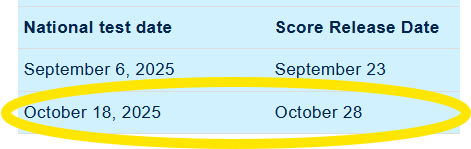
Unless a current senior has already hit their score goal on the ACT, then they should also be registered for the October ACT so that they have a back-up. As we have detailed before, there is variability in test taking performance (even from errors in the scaling process itself, and thus through no fault at all of the student).
For when to start preparing, when to take the ACT and when to stop, use our SAT and ACT testing timeline.
If you test online, learn the eight Desmos moves that save time on ACT Math.
We tutor the enhanced ACT one on one, in New Jersey and online for students anywhere. Any questions? We love questions. Feel free to reach out to us anytime. It is always our pleasure to help students improve their academic preparedness, score higher on their entrance exams, and increase their success.